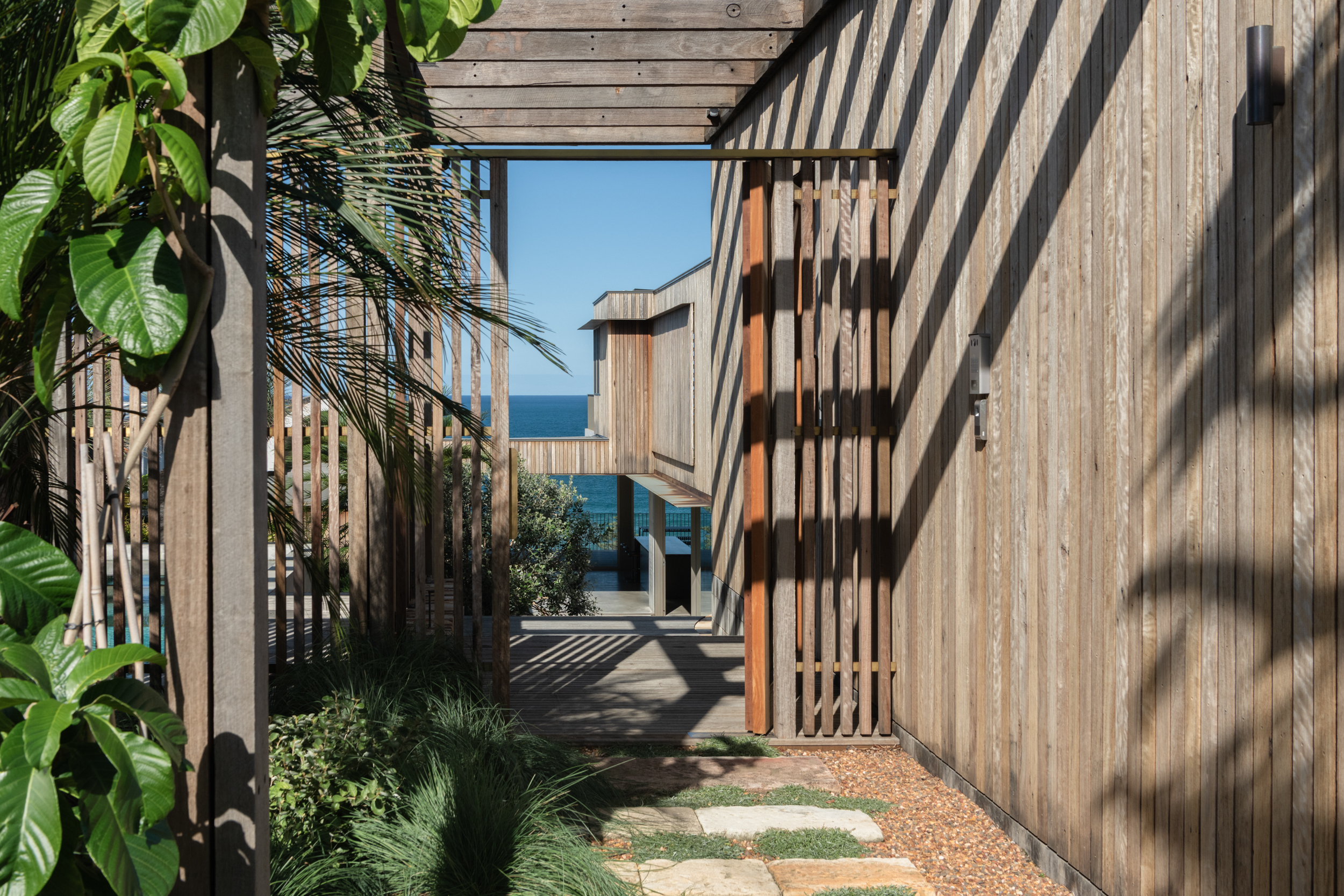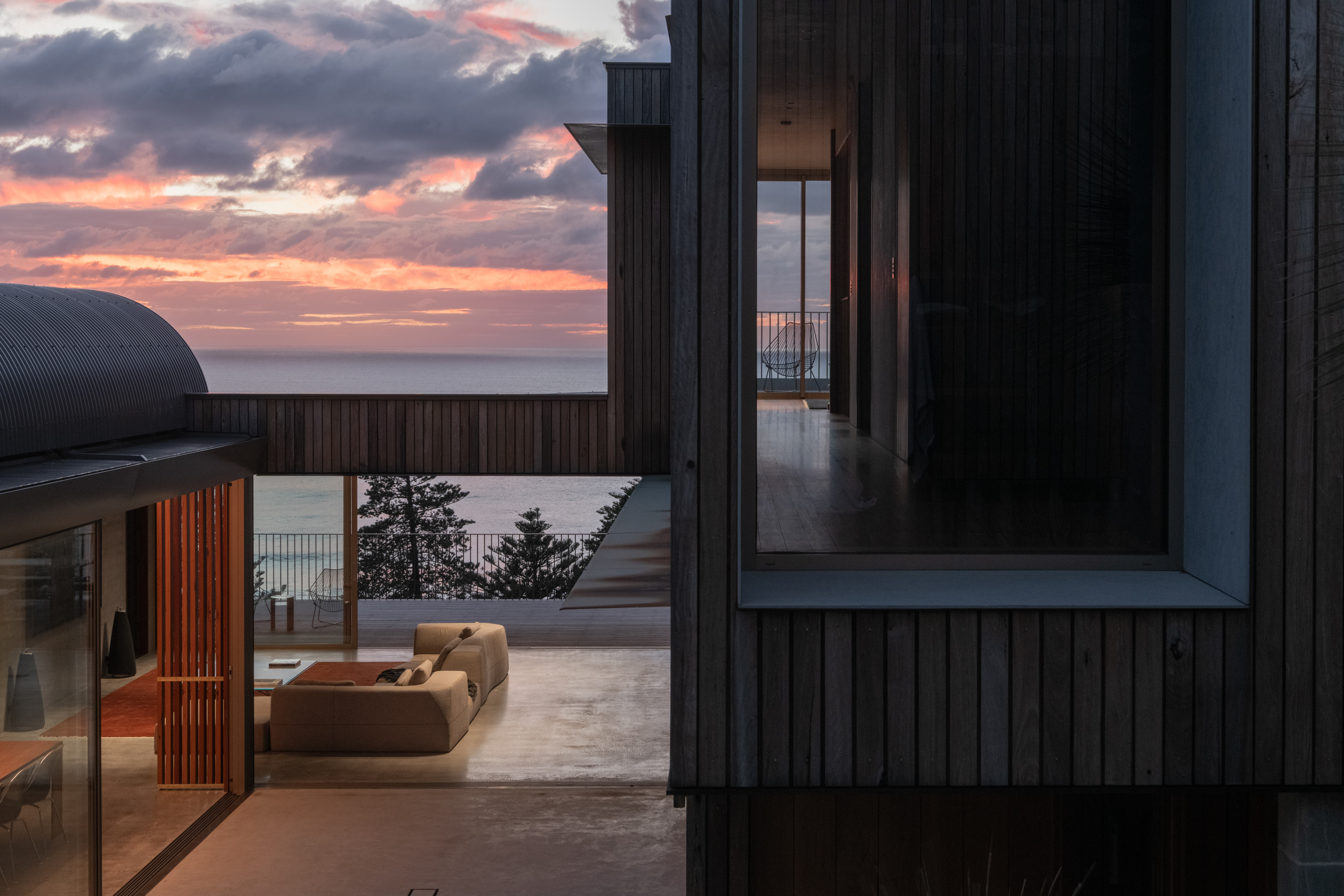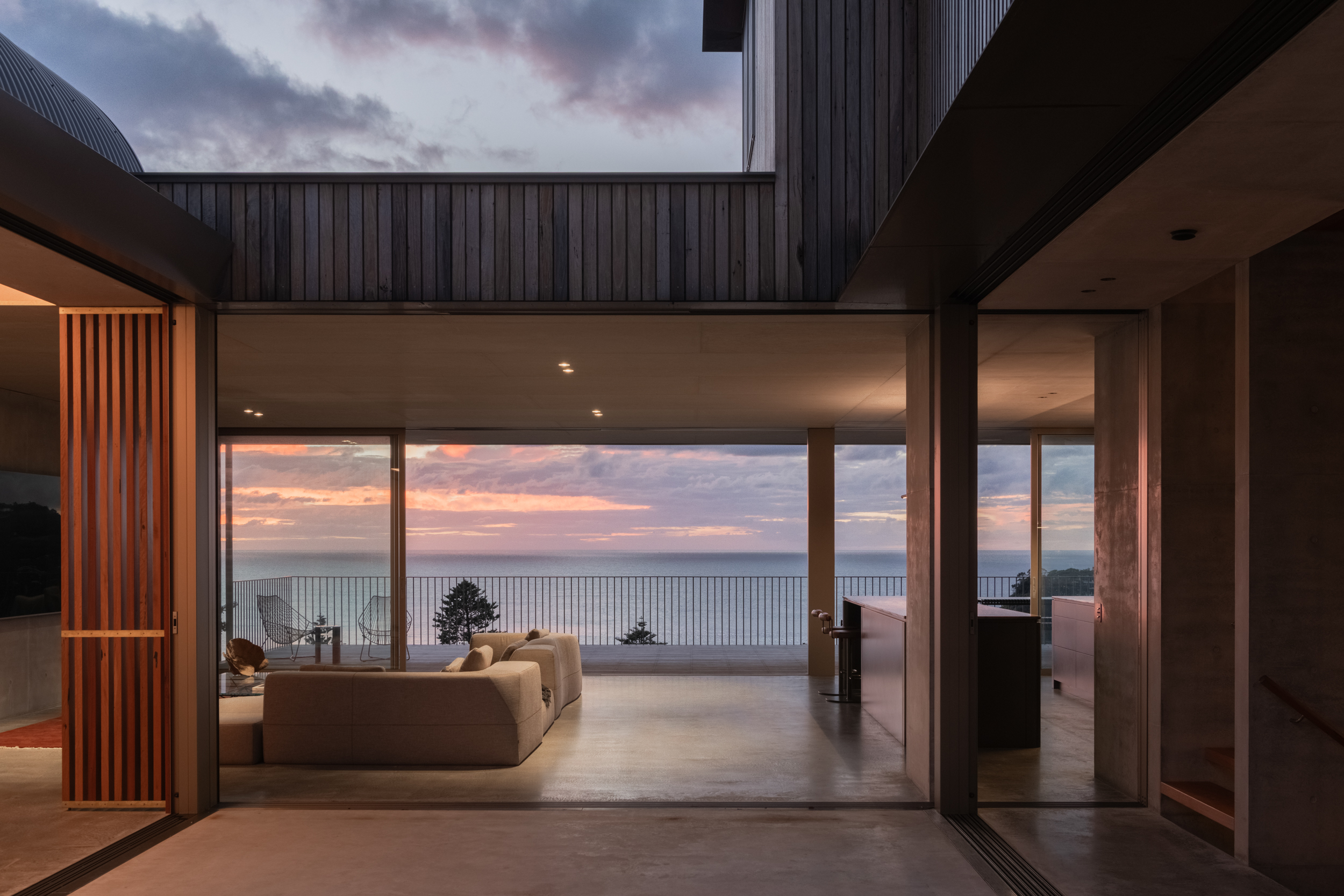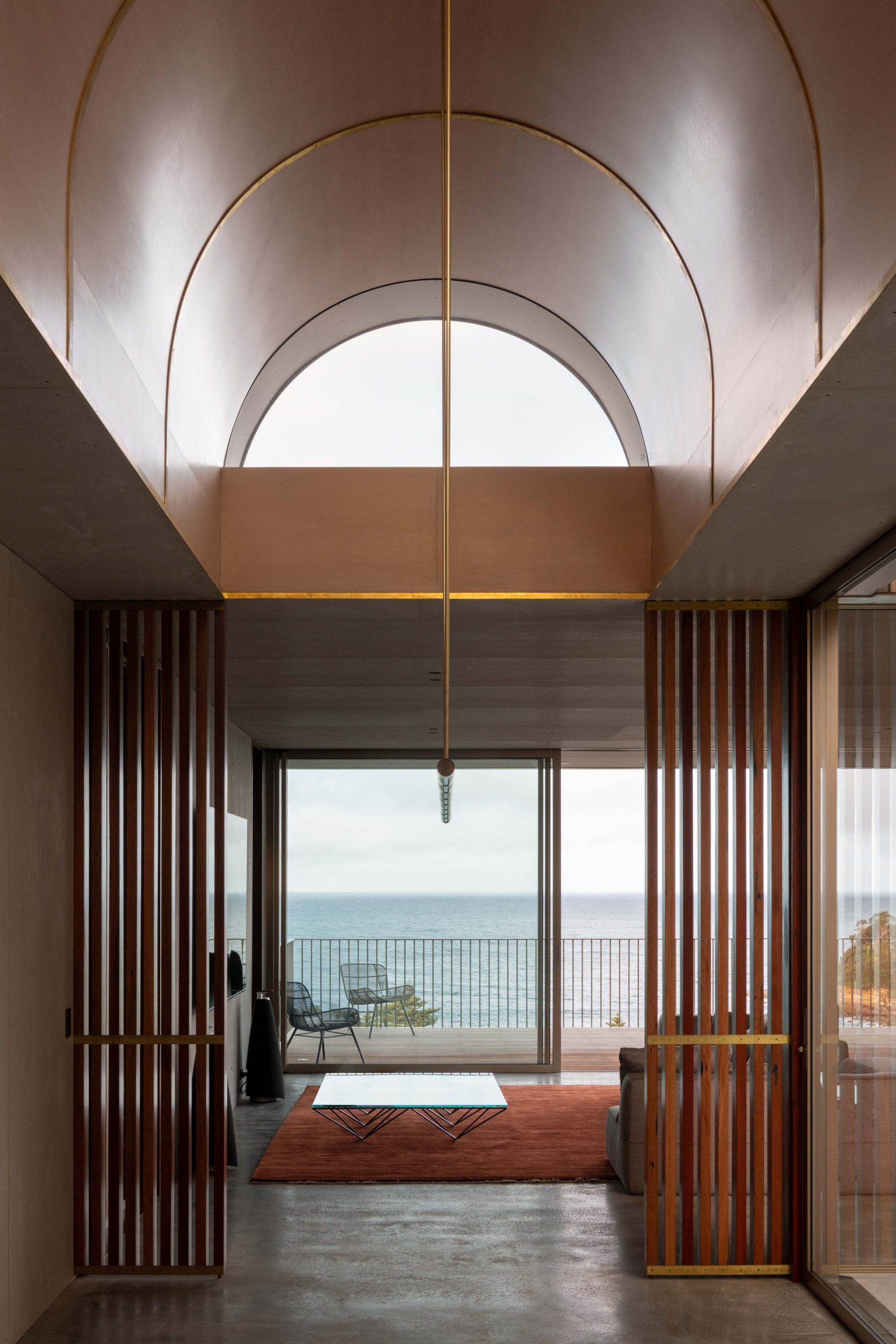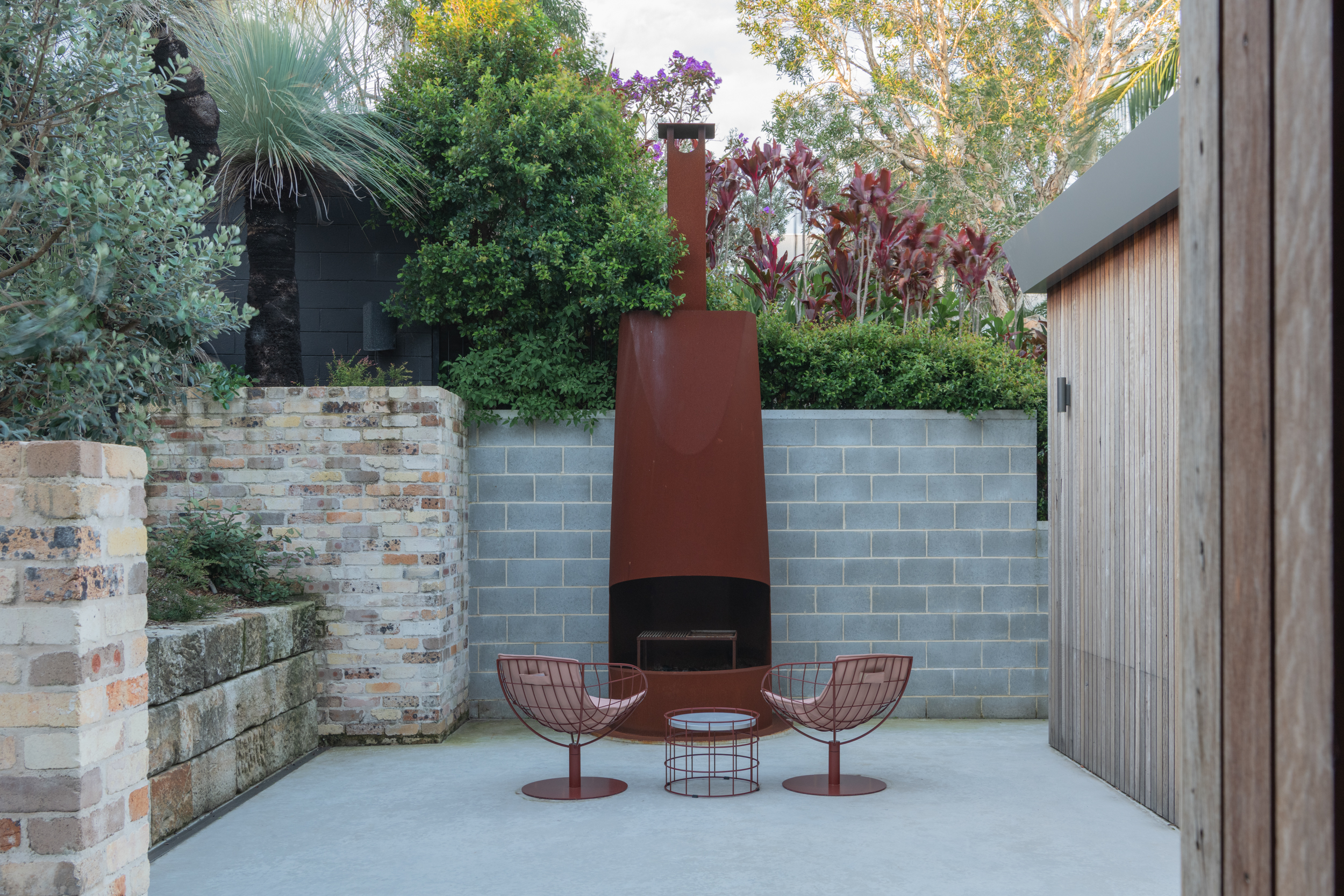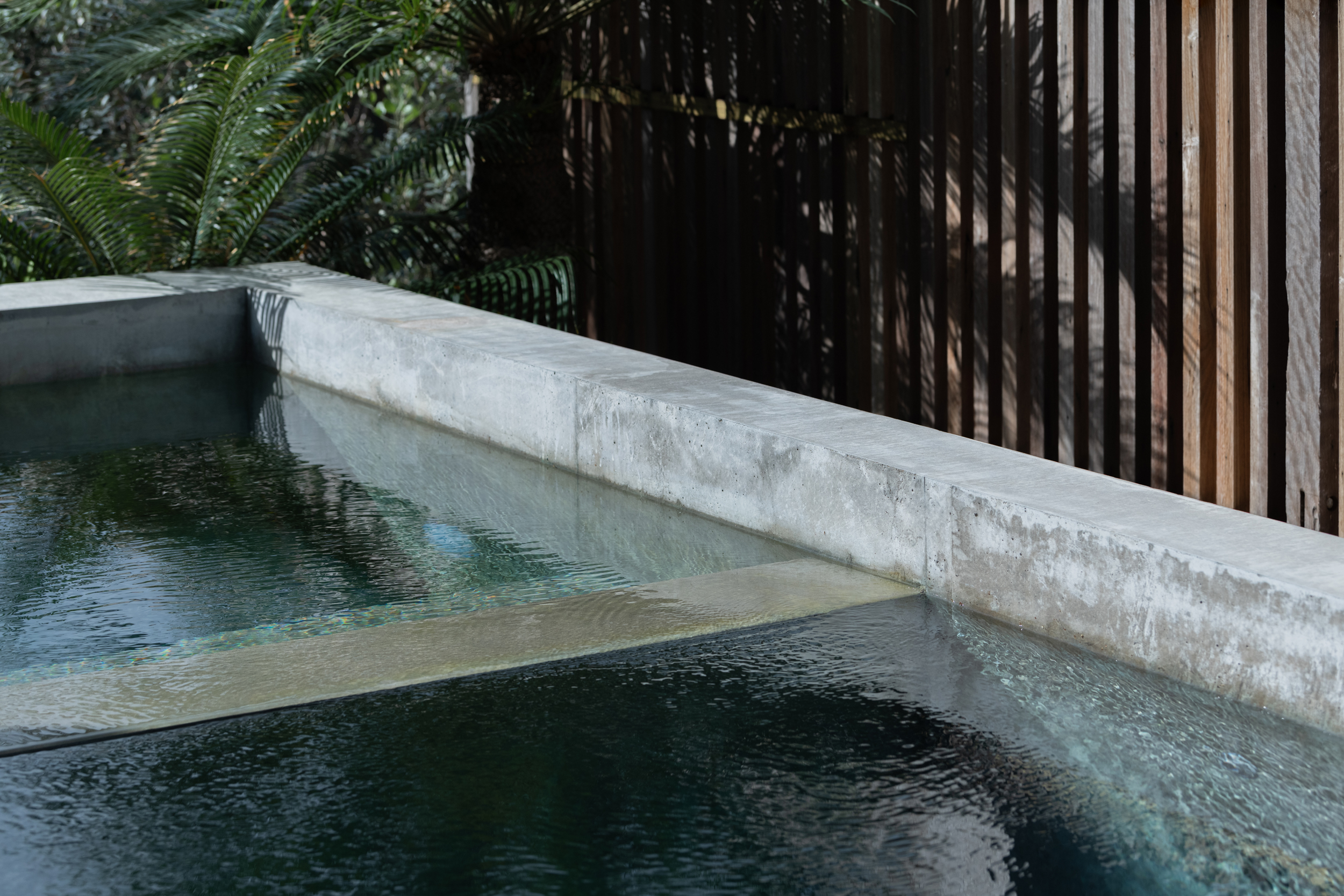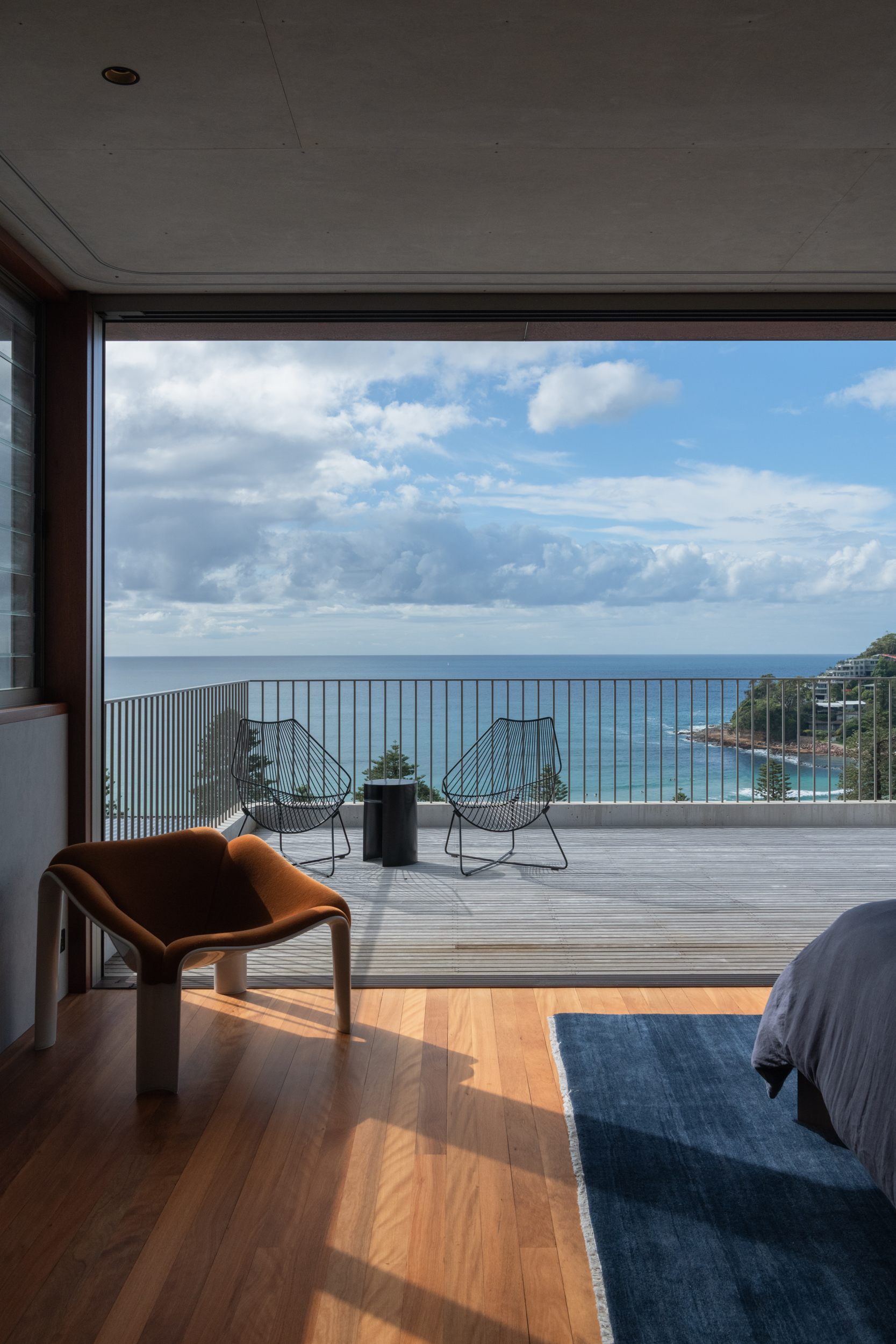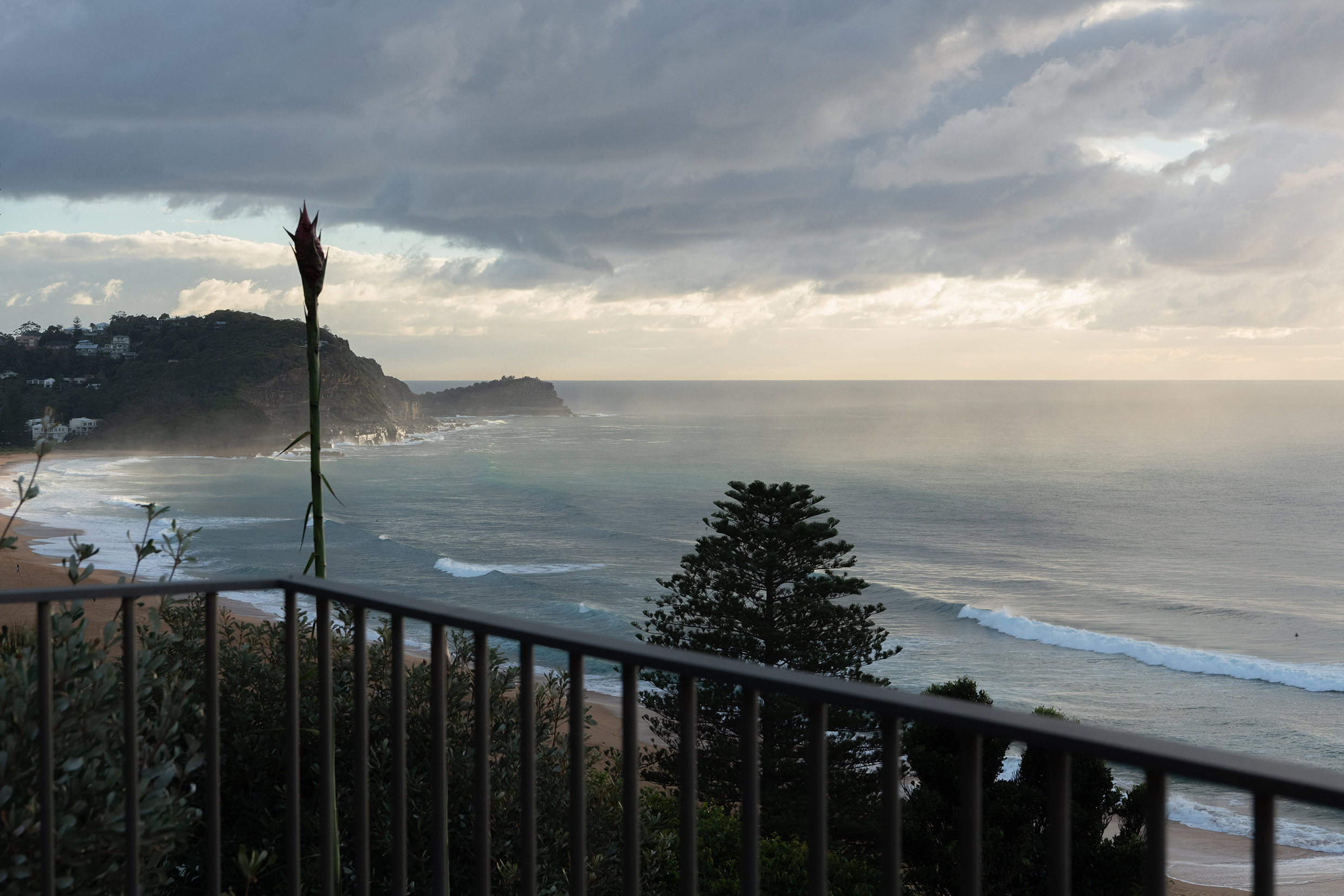
Avoca Beach House sits atop an east-facing crest, where the land gently divides Avoca Lake from the Pacific Ocean. Perched between the land and sea, the home is a sculptural composition of geometric forms, crafted from a unique collection repurposed materials and nestled within a native garden that spills toward the sea.
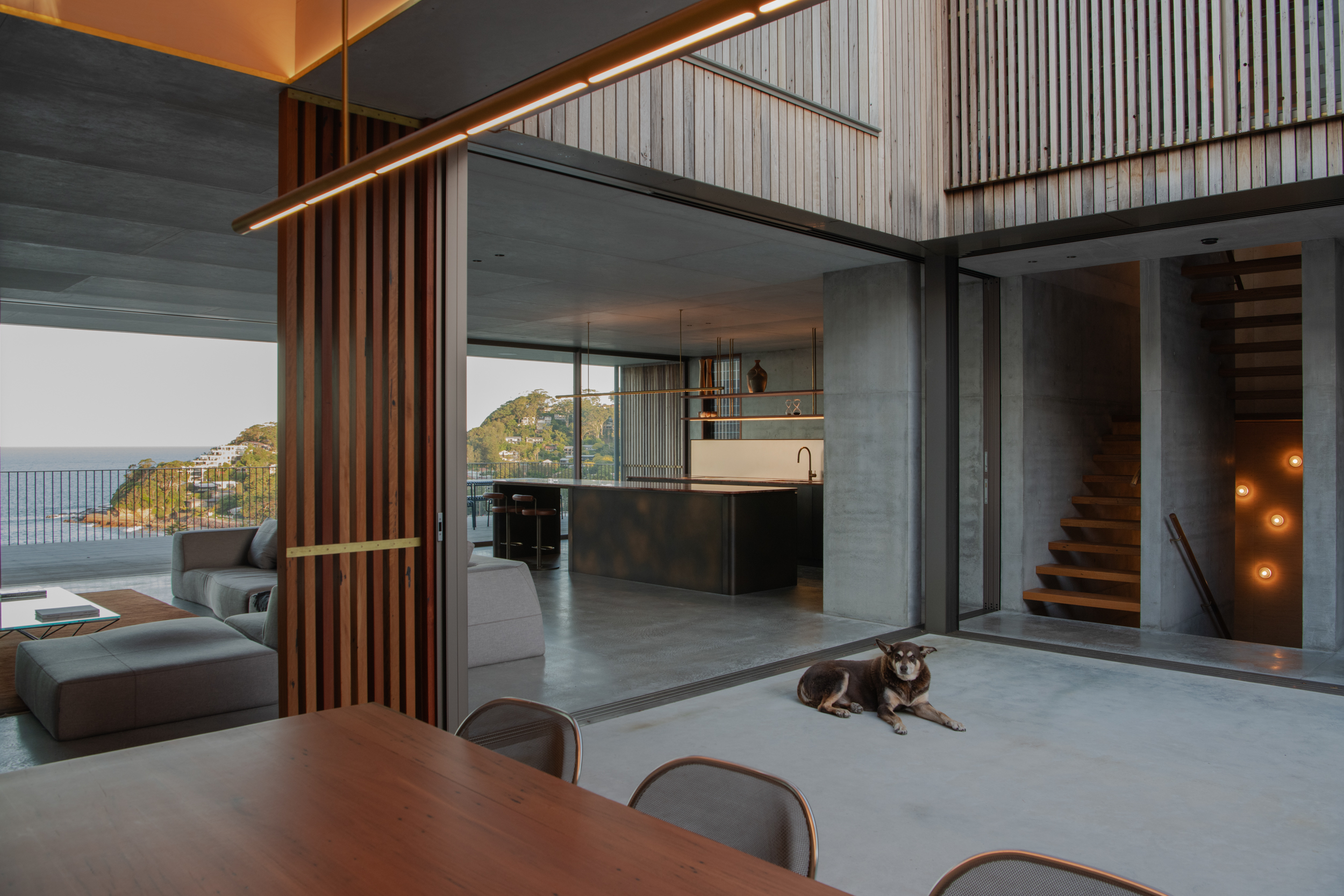
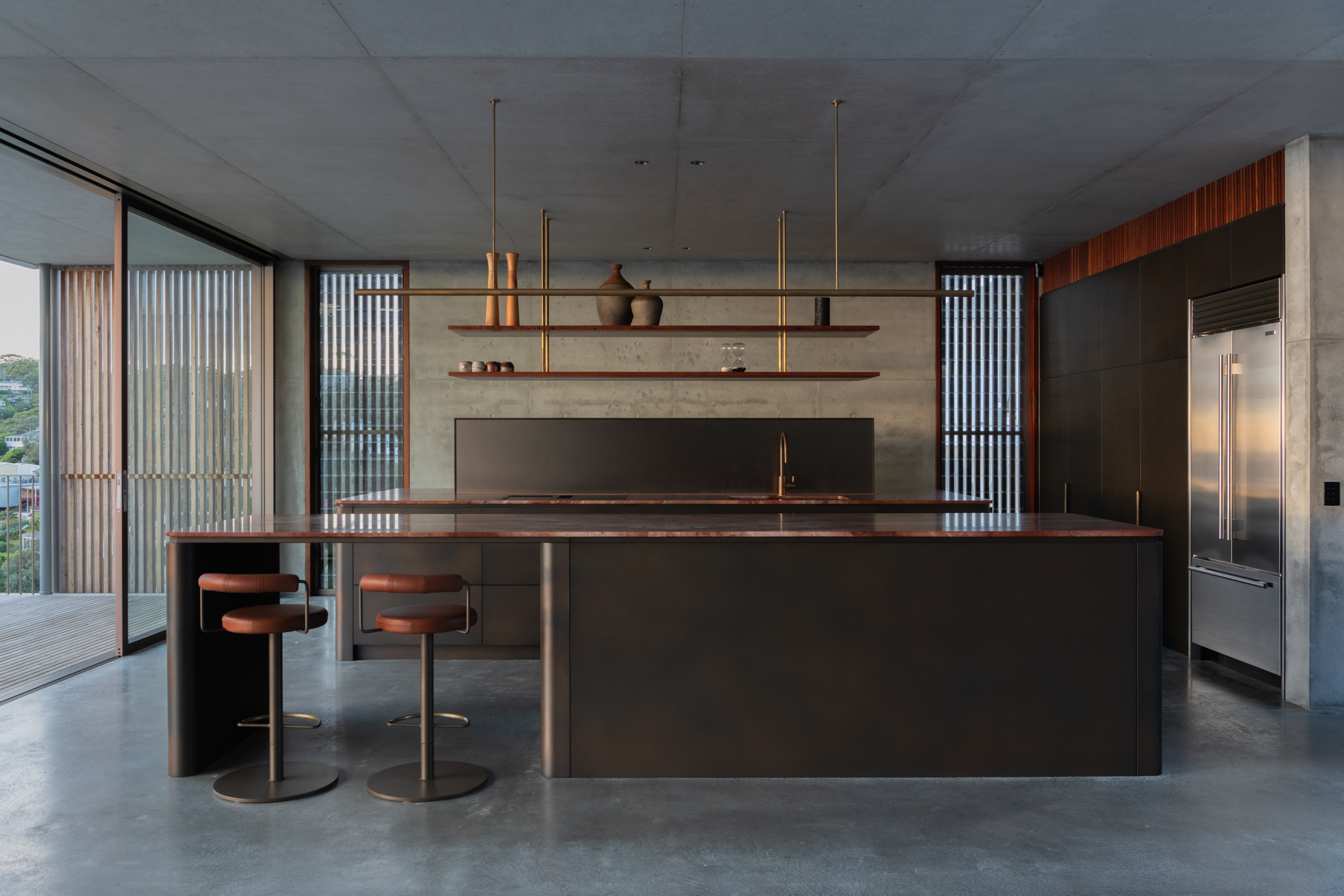
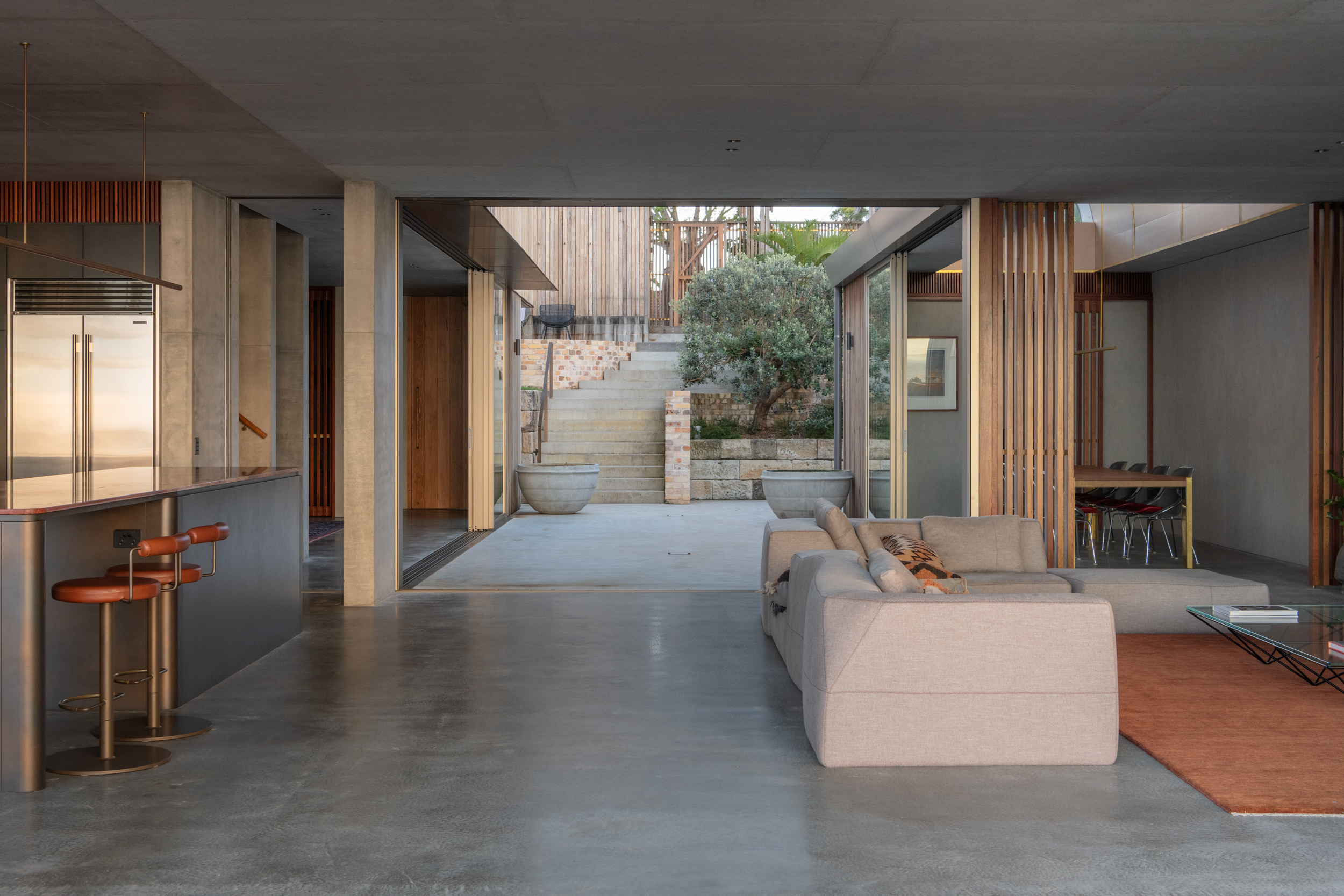
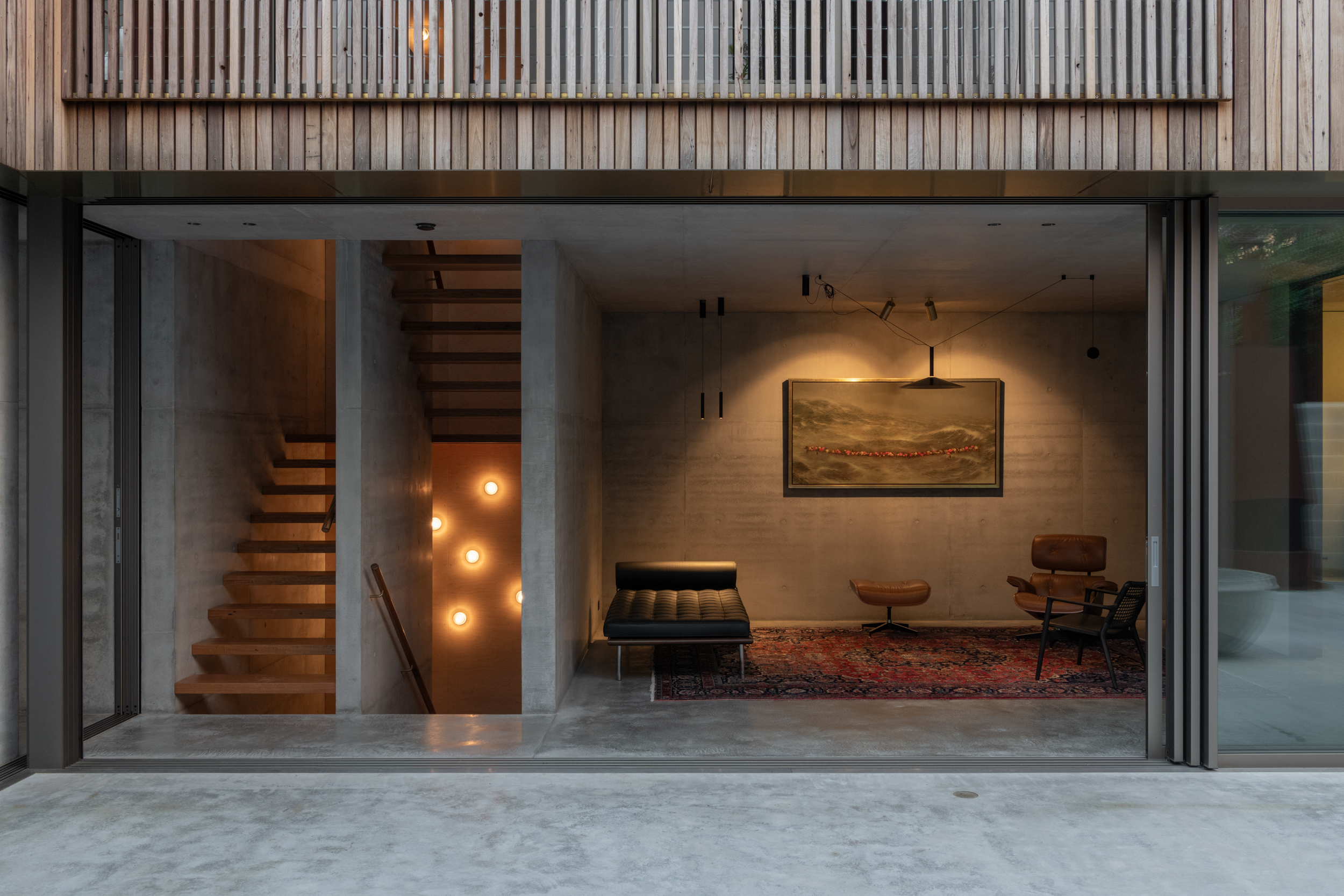
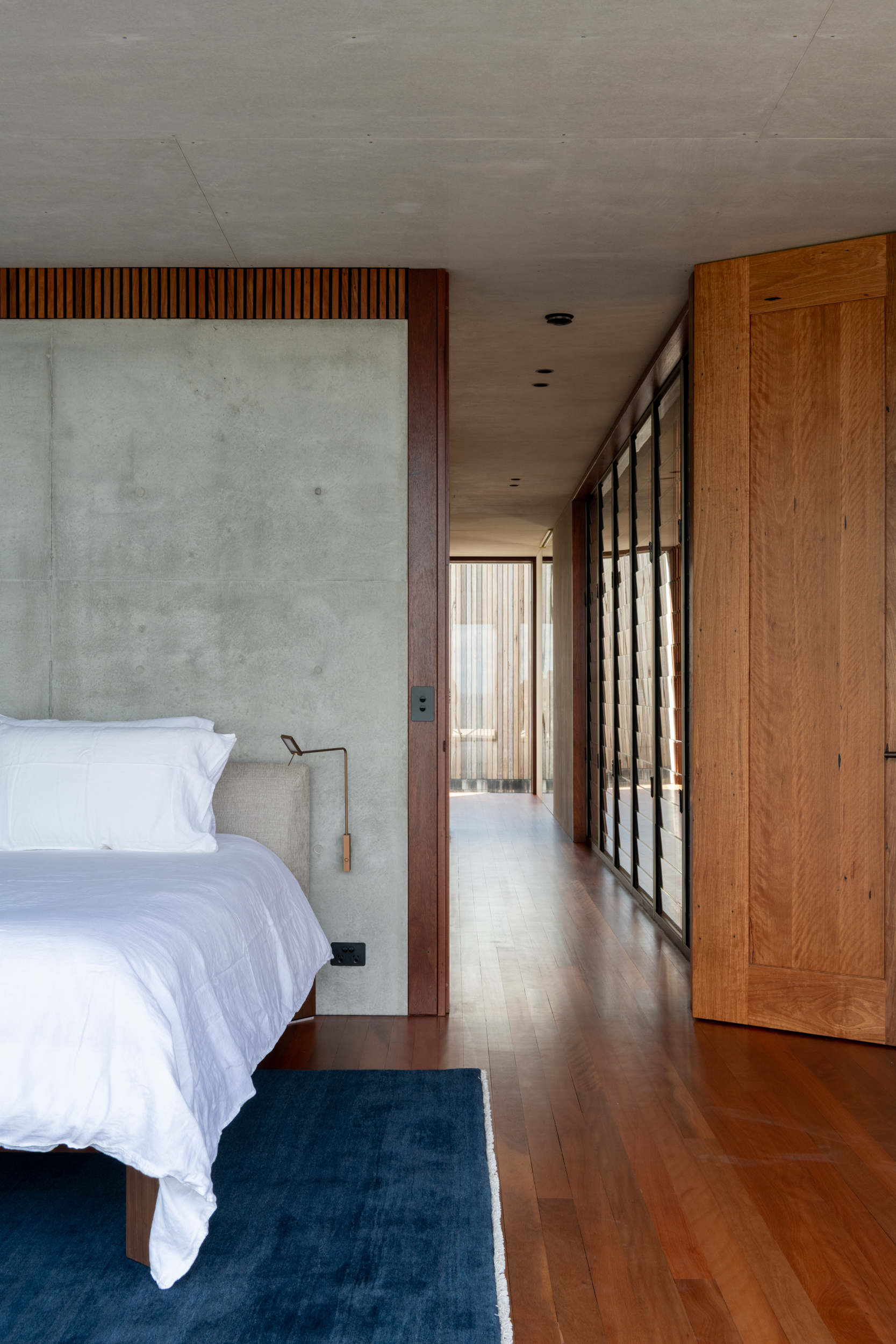
The new home reclaims the modest footprint of the former beachside cottage, introducing a central north-facing courtyard as the heart of the plan, and inserting a a new, robust framework of exposed concrete floor plates and load-bearing brick and concrete walls engineered to withstand harsh climatic conditions while providing valuable thermal mass for year-round comfort.
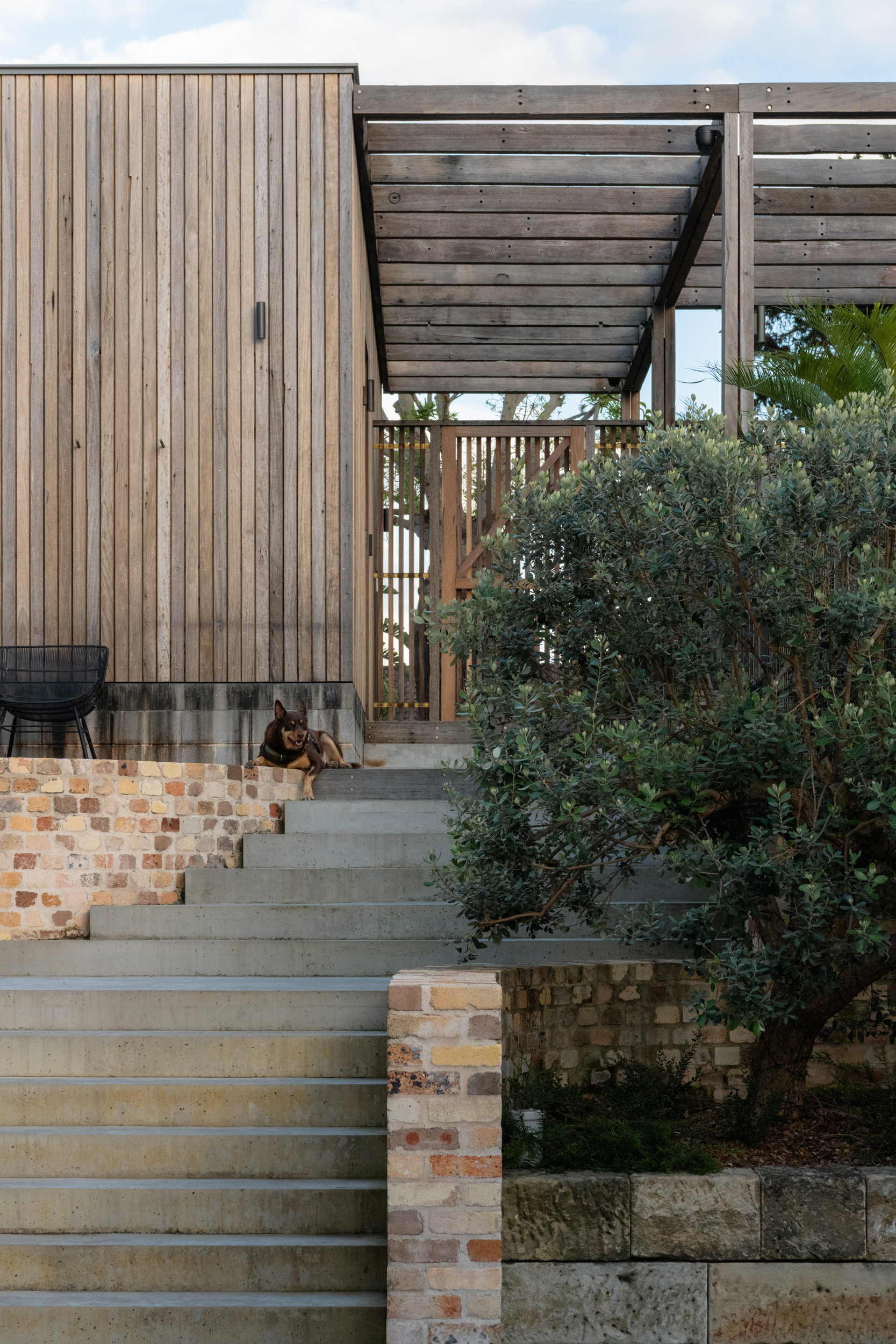
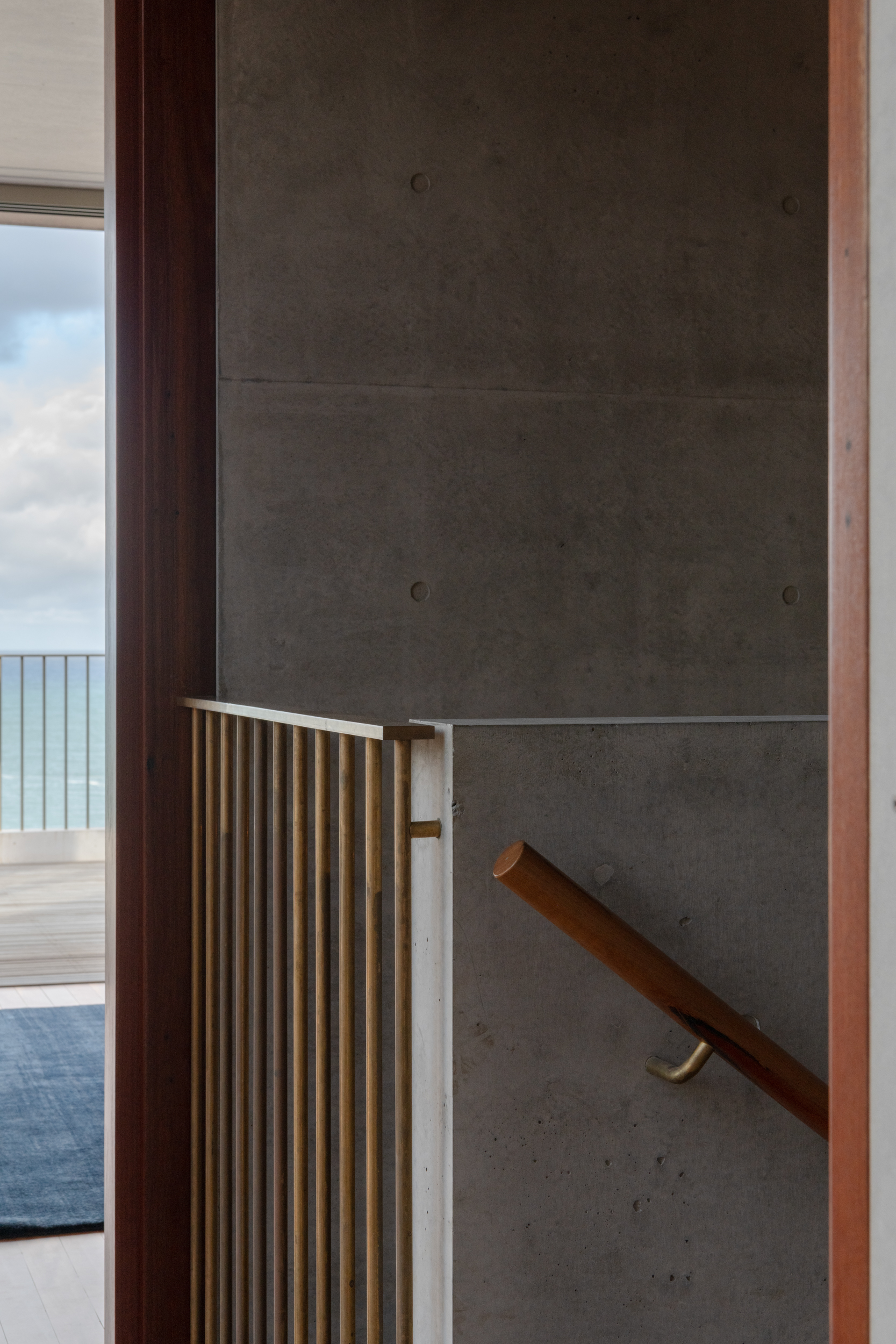
These walls remain exposed internally, offering a raw material finish. Externally, they are insulated and clad in recycled timber and barestone fibre cement sheeting. Mill-finish brass balustrades and awnings have been left to patina and calcify naturally, deepening the home’s connection with longevity and place.
Clear circulation paths and improved spatial planning offer greater functionality across living and utility zones by enhancing natural light, cross-flow ventilation, and a strong connection to both the central courtyard and the broader coastal context. Passive solar design principles underpin the home’s environmental performance, with careful orientation, thermal mass, and natural ventilation reducing reliance on mechanical systems.
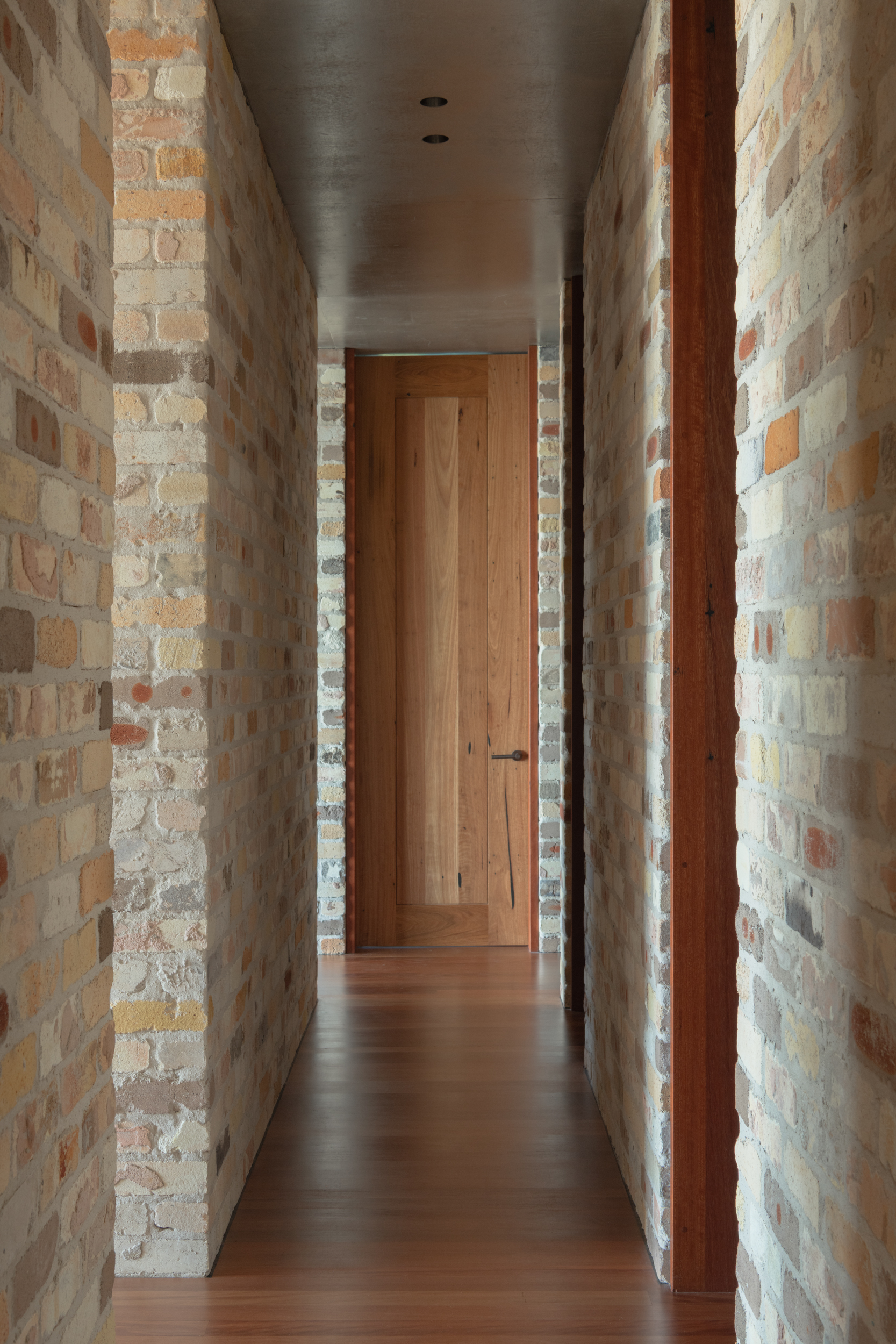
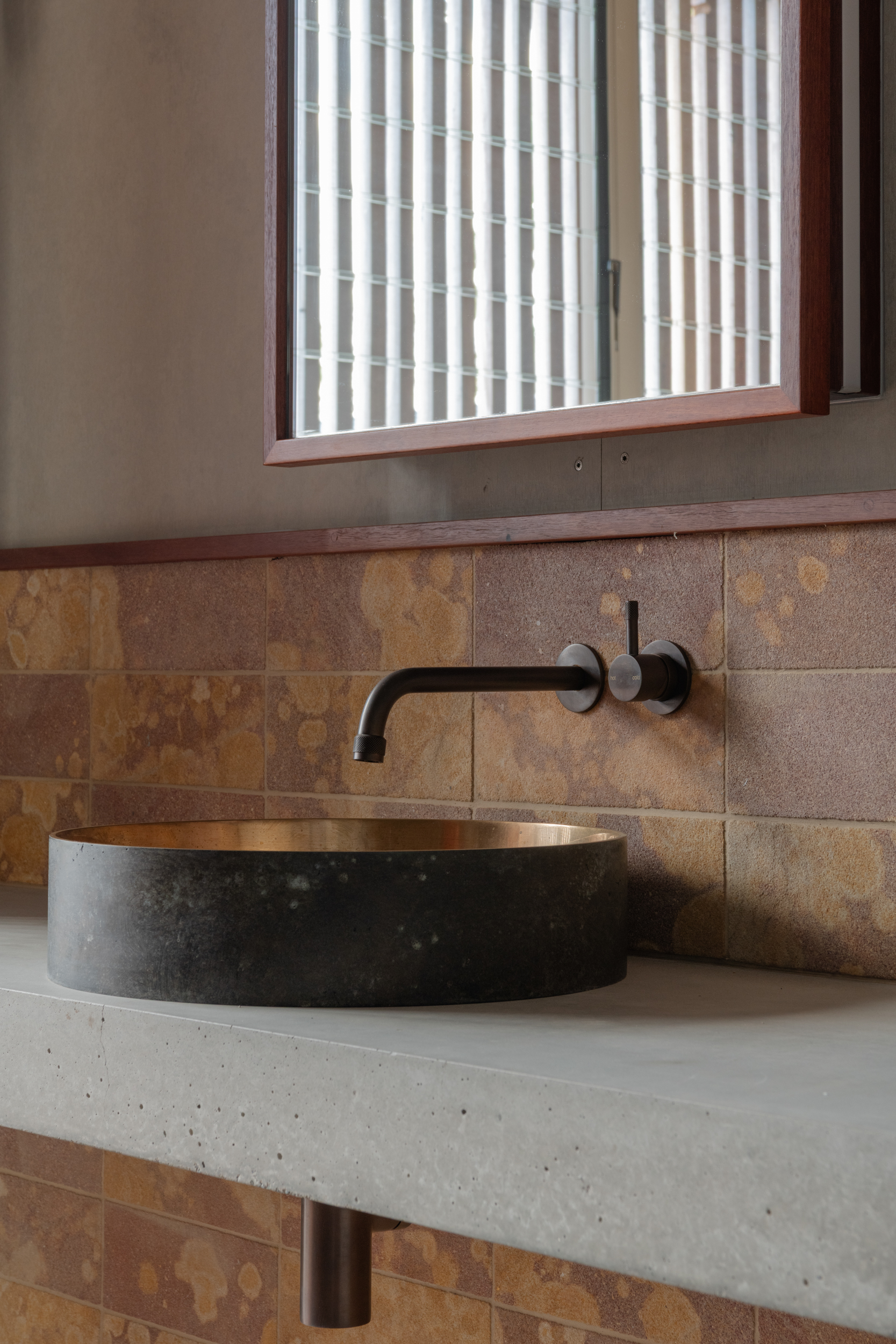
A lifetime of collecting has informed the unique and storied material palette. Timbers from Sydney Theatre Company, early 1900s warehouses, Melbourne tram station, community halls (1930-40) and a WW2 aircraft manufacturing facility have been used for flooring, beams, handrails, cladding, joinery and decking. Bricks from a late-1800s fire kiln chimney and convict bricks from Sydney terrace houses (1810-1840) have been reused and convict sandstone blocks from wool stores foundations are used on the garden pathway, and handcut into bathroom tiles.
The result is a distinctive coastal home that is robust, expressive, and rich in character. It’s a place where materials are celebrated in their raw form, where history is embedded in every surface, and where the architecture is designed to age gracefully with its inhabitants and surroundings.